
Paint protection film is one of the most effective ways to safeguard your vehicle’s paint from chips, scratches, and everyday road damage. However, many vehicle owners notice that when PPF problems occur, they almost always begin at the edges. Edge lifting or peeling often appears long before the center of the film shows any wear, leading to frustration and questions about product quality.
In most cases, edge failure has very little to do with the quality of the film itself. Instead, it is the result of how the film is installed, how it behaves under tension, and how it responds to environmental conditions.
At Xtreme Window Tint and Glass in Addison, Illinois, we frequently inspect vehicles with prematurely failing PPF edges. Time and again, the root cause traces back to improper installation methods, poor edge preparation, or uncontrolled curing environments. Understanding why edges fail first helps vehicle owners make informed decisions and highlights why professional installation is critical for long-term protection.
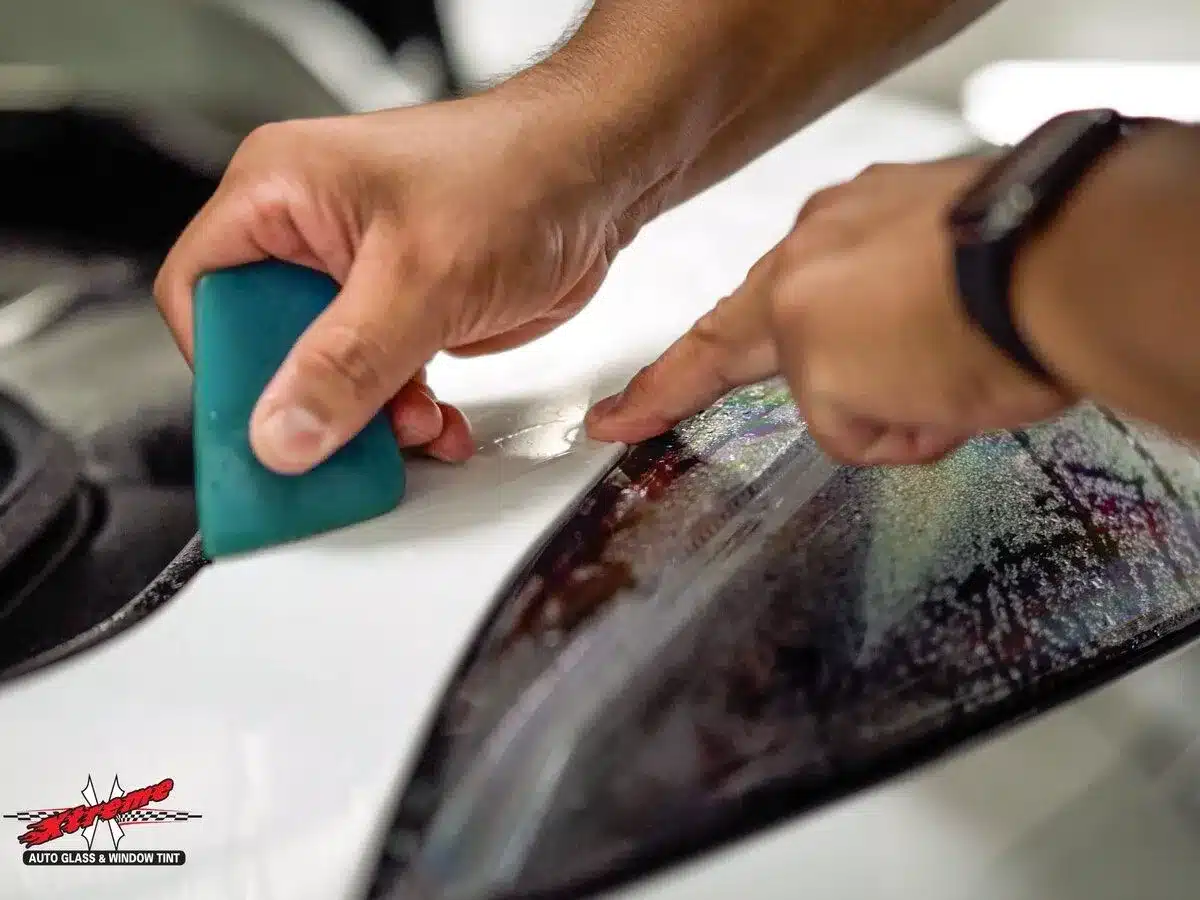
Why PPF Edges Are More Vulnerable Than the Center
The center of paint protection film typically bonds evenly across flat or gently curved surfaces. This uniform contact allows adhesive to distribute stress evenly, creating a strong and stable bond. Edges, however, do not enjoy the same level of support.
PPF edges are constantly exposed to airflow, moisture, temperature changes, and physical movement. Door openings, vibrations from driving, and car washing all place repeated stress on film edges. Because edges lack overlapping support, they absorb more of this stress than the center of the film.
Two primary forces contribute to this vulnerability: adhesive creep and stretch memory. These forces act slowly but consistently, making edges the most likely point of failure over time.
How Adhesive Creep Leads to Edge Lifting
Adhesive creep refers to the gradual weakening and movement of adhesive when it is exposed to heat, vibration, and environmental stress. This process happens slowly and often goes unnoticed at first.
As adhesive strength decreases at the edges, the film may begin lifting by a very small margin. Even minimal lifting allows dirt, moisture, and road debris to slip underneath the film. Once contamination enters, the adhesive bond continues to degrade, accelerating failure.
Illinois driving conditions make adhesive creep more likely. Seasonal heat, cold, humidity, and road salt all place stress on exposed edges. Vehicles in areas like Addison, Schaumburg, and Elmhurst experience these changes year-round.
At Xtreme Window Tint and Glass, adhesive creep is most commonly seen on vehicles that were installed outdoors or without controlled curing conditions. Proper indoor installation significantly reduces this risk.
The Role of Stretch Memory in Paint Protection Film Failure
Stretch memory is another major contributor to edge lifting. During installation, PPF must be stretched to fit curves, contours, and body lines. While stretching is necessary, the film naturally wants to return to its original shape after installation.
This tension does not disappear immediately. Instead, it continues pulling against the adhesive, especially at the edges. Over time, this tension can overcome weakened adhesive, causing lifting or wrinkling.
Stretch memory becomes more pronounced in warm conditions. Heat allows the film to relax more aggressively, increasing the force pulling at the edges. This is why edge lifting often becomes more noticeable during warmer months.
Professional installers manage stretch memory by limiting excessive stretching, using controlled heat, and allowing the film to settle before final edge sealing.
How Vehicle Curves Increase Edge Stress
Modern vehicles are designed with bold curves, sharp angles, and aggressive styling. While visually appealing, these features create challenges for paint protection film.
Tight curves concentrate mechanical stress at the edges. Areas such as mirror caps, bumper corners, door handles, and wheel arches experience higher levels of tension and movement. These areas are also more exposed to environmental elements.
Without proper technique, film installed on these curves is more likely to lift prematurely. At Xtreme Window Tint and Glass, special attention is given to high-stress areas. Our installation process accounts for vehicle geometry and reduces tension where edge failure is most likely to occur.
Why Professional Installation Makes a Critical Difference
Many PPF edge failures originate from rushed or low-cost installations. Mobile installers or inexperienced shops may overstretch film, skip proper surface preparation, or fail to seal edges thoroughly.
Professional installation is a detailed process that goes far beyond applying film to paint. It involves deep surface cleaning, precise alignment, controlled stretching, proper adhesive activation, and careful edge finishing.
At Xtreme Window Tint and Glass, all paint protection film installations are performed indoors in a controlled environment. Temperature, humidity, and cleanliness are managed throughout the process to ensure consistent results.
This approach produces stronger adhesion, cleaner edges, and significantly longer-lasting protection.
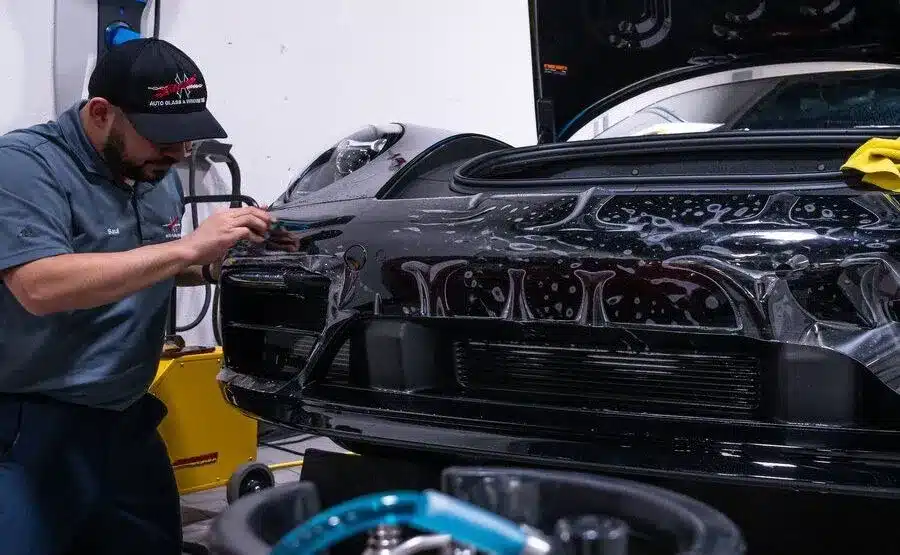
Preventing Edge Failure Through Proper Installation Techniques
Preventing edge failure starts with disciplined installation practices. Limiting excessive stretch reduces tension that leads to lifting. High-quality adhesives provide better resistance to creep under heat and vibration.
Edge sealants play an important role as well. These sealants create a barrier that blocks moisture and debris from entering beneath the film. When applied correctly, they dramatically improve edge longevity.
Controlled curing conditions are equally important. Allowing adhesive to set fully before exposing the vehicle to weather, washing, or road use stabilizes the bond and reduces early failure.
These steps are not optional upgrades. They are professional standards that protect your investment.
Advances in Paint Protection Film Durability
Paint protection film technology has improved significantly in recent years. Many premium films now feature self-healing properties that allow minor scratches to disappear when exposed to heat. Advanced top coatings improve resistance to UV damage, staining, and chemical exposure.
Modern adhesive systems are stronger and more flexible, helping reduce issues related to adhesive creep and stretch memory. Improved film elasticity also allows better performance on curved surfaces.
Despite these advancements, even the best film cannot compensate for poor installation. Quality materials must be paired with expert technique to achieve long-term results.
Why This Matters for Illinois Vehicle Owners
Vehicles in Illinois face harsh driving conditions throughout the year. Road salt, moisture, temperature swings, and prolonged sun exposure all place stress on paint protection film.
When PPF edges are installed correctly, the film shields your vehicle from these elements while preserving appearance and resale value. Poor installation, however, allows environmental stress to accelerate edge failure.
At Xtreme Window Tint and Glass, our PPF installation process is designed specifically for local driving conditions. We focus on durability, precision, and long-term performance.
Choosing the Right Shop for Paint Protection Film
Paint protection film is a long-term investment in your vehicle. Choosing the right shop ensures that investment delivers real value.
A controlled installation environment, experienced technicians, and proven processes all contribute to better results. These factors cannot be replicated through rushed or uncontrolled installations.
Xtreme Window Tint and Glass is committed to quality, consistency, and craftsmanship. Every vehicle is treated with care, and every installation is performed with attention to detail.
Schedule a Professional Paint Protection Film Consultation
If you are noticing PPF edge lifting or considering paint protection film for your vehicle in Addison, Glendale Heights, Schaumburg, Wheaton, Glen Ellyn, Elmhurst, Oakbrook, or Carol Stream, trust a professional team that understands the science behind long-lasting protection.
Call (630) 626-5125 or visit
https://www.xtremewindowtintil.com/contact-xtreme-auto-glass-and-window-tint
to schedule your consultation with Xtreme Window Tint and Glass.
Protect your vehicle with confidence by choosing professionals who install PPF correctly from the start.